
Security-by-Design in Banking: Baking Security into Development, Not Just as an Afterthought
Banks today are releasing digital products rapidly. Mobile banking apps, embedded finance platforms, API ecosystems, and cloud-native payment systems are now central to customer experience. But while innovation accelerates, cyber threats targeting the financial sector are also evolving. The challenge is no longer whether banks invest in cybersecurity. The challenge is whether security is embedded early enough in development to prevent damage before production. This is where Security-by-Design in Banking becomes important.
For years, many financial institutions depended on testing processes that reviewed applications only before deployment. That approach is no longer effective for modern software delivery cycles. In highly connected banking ecosystems, delayed fixes can expose sensitive customer data, interrupt critical services, and increase regulatory risk. As banking environments become more complex and release cycles become faster, identifying vulnerabilities late in development creates both technical and operational challenges
Why delay in security detection increases risk ?
When vulnerabilities are identified late in the development lifecycle, remediation becomes significantly more expensive and operationally disruptive. Security flaws hidden within APIs, authentication systems, or cloud infrastructure can spread across multiple services before detection, increasing the overall attack surface.
This directly affects financial sector cybersecurity by weakening operational resilience, increasing incident response costs, and creating greater regulatory exposure. Delayed vulnerability detection can also damage customer trust, especially in highly connected banking ecosystems where uninterrupted digital experiences are expected.
Banks using outdated security workflows often struggle with both CI/CD security testing and scalable banking application security governance. As release cycles become faster, relying only on security validation near deployment creates serious visibility gaps across modern banking environments.
Why Is Final Pentesting Alone Not Enough for Modern Banking Security?
Many financial institutions still rely heavily on security testing conducted near the final stages of software deployment, where systems are checked for vulnerabilities before going live. While this approach can identify certain risks, it is no longer enough for modern banking platforms that release updates weekly or even daily.
Without continuous CI/CD security testing, vulnerabilities can easily move into production environments before detection. This is why leading institutions are strengthening DevSecOps in banking through automated SAST and DAST in banking environments, continuous vulnerability monitoring, secure deployment automation, and secure CI/CD pipelines. These practices improve scalable banking application security while supporting stronger financial sector cybersecurity and long-term operational resilience.
Why Is Shift-Left Security Becoming Essential in Modern Banking?
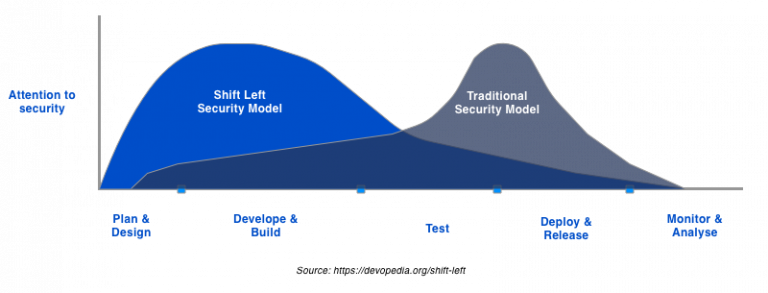
Modern banking platforms can no longer rely on security checks performed only near deployment. Shift-left security moves security activities earlier into the software development lifecycle, allowing developers to identify and fix vulnerabilities while applications are still being built. This approach reduces operational risk, improves release velocity, and strengthens vulnerability management before issues reach production environments.
By integrating security directly into engineering workflows, organizations improve developer accountability, banking application security, and overall financial sector cybersecurity maturity. In modern DevSecOps in banking environments, practices such as code scanning, dependency analysis, secrets detection, infrastructure validation, and API testing are increasingly embedded into secure CI/CD pipelines. This allows teams to strengthen scalable banking application security while maintaining faster and more secure software delivery cycles.
DevSecOps in Banking Enables Secure and Scalable Development
DevSecOps in banking is an approach where security becomes part of the entire software development and deployment process instead of being handled only at the final review stage. Rather than treating security as a separate function, development, operations, and security teams work together continuously to identify and resolve risks earlier.
Modern banking platforms release updates continuously, making manual security reviews alone insufficient for maintaining strong protection. DevSecOps in banking integrates security directly into agile workflows, cloud deployments, CI/CD security testing, runtime monitoring, and infrastructure automation so vulnerabilities can be identified earlier in the development lifecycle.
Instead of slowing development, this approach helps teams deliver secure applications faster and more consistently. By embedding security into everyday engineering processes, financial institutions improve banking application security, strengthen financial sector cybersecurity, and support scalable digital banking operations with lower operational risk.
How Automated CI/CD Security Testing Improves Resilience?
Automation is now a critical part of Security-by-Design in Banking. As banking platforms release updates more frequently, automated CI/CD security testing helps teams identify vulnerabilities earlier and improve banking application security without slowing development. Modern security workflows increasingly rely on SAST and DAST in banking environments to continuously detect risks throughout the software lifecycle.
1. SAST in Banking
SAST (Static Application Security Testing) analyzes application source code before the software runs. It helps developers detect security weaknesses early during development and improve code-level security before deployment.
SAST in banking is commonly used to:
- Identify insecure coding practices
- Detect weak authentication logic
- Find hardcoded credentials
- Detect insecure encryption implementations
Because SAST testing runs automatically inside secure CI/CD pipelines, teams can fix vulnerabilities earlier with lower remediation effort.
2. DAST in Banking
DAST (Dynamic Application Security Testing) tests applications while they are running to identify vulnerabilities that appear during real user interactions and runtime behavior.
DAST in banking is commonly used to:
- Detect API exposure risks
- Identify session management vulnerabilities
- Detect authentication and authorization issues
- Identify security misconfigurations
Together, automated SAST and DAST in banking strengthen DevSecOps in banking practices, improve financial sector cybersecurity, and support more resilient digital banking infrastructure.
The Role of Secure CI/CD Pipelines
Modern banking institutions rely heavily on automated deployment infrastructure, making secure CI/CD pipelines essential for maintaining strong banking application security. Without proper controls, vulnerabilities can move directly from development into production systems, increasing operational and regulatory risk.
Effective secure CI/CD pipelines integrate automated security gates, compliance validation, secrets management, dependency verification, and infrastructure security checks throughout the software delivery lifecycle. This improves deployment consistency, audit readiness, and operational resilience while supporting enterprise-grade DevSecOps in banking practices.
As threat actors increasingly target open banking APIs, cloud workloads, payment systems, and third-party integrations, continuous CI/CD security testing has become critical for long-term financial sector cybersecurity resilience.
Why Is Compliance Driving Security-by-Design in Banking?
Modern financial regulations now focus heavily on operational resilience, secure software delivery, and financial sector cybersecurity. As banking ecosystems become more connected, organizations are expected to embed security directly into development and infrastructure processes.
Two major regulations currently shaping banking application security are DORA compliance banking requirements and PSD2/PSD3 security requirements.
1. European Digital Operational Resilience Act (DORA) Requirements
The European Union introduced the Digital Operational Resilience Act (DORA) to strengthen operational resilience and cybersecurity standards for financial institutions.
Modern DORA compliance banking strategies increasingly require:
- Continuous risk monitoring
- ICT resilience testing
- Third-party risk management
- Incident reporting mechanisms
2. PSD2 and PSD3 Security Requirements
PSD2 and upcoming PSD3 security requirements are expanding cybersecurity responsibilities across open banking ecosystems. These regulations focus heavily on API security, authentication workflows, customer consent management, and transaction monitoring.
Organizations are increasingly strengthening banking application security, secure CI/CD pipelines, and financial sector cybersecurity practices to support long-term compliance readiness.
As regulations continue evolving, Security-by-Design in Banking is becoming essential for maintaining operational resilience and compliance.
Security-by-Design in Banking Creates Long-Term Business Value
The biggest misconception around cybersecurity is that it slows innovation. In reality, mature Security-by-Design in Banking models often accelerate delivery.
Early Security Reduces Long-Term Costs
Organizations using:
- Shift-left security
- DevSecOps in banking
- SAST and DAST in banking
- Secure CI/CD pipelines
typically spend less on emergency remediation and post-breach recovery.
| Traditional Security Model | Security-by-Design in Banking |
| Late vulnerability discovery | Early risk identification |
| Manual reviews | Automated CI/CD security testing |
| Reactive compliance | Continuous compliance readiness |
| Isolated security teams | DevSecOps in banking collaboration |
| Slower incident response | Stronger financial sector cybersecurity |
Security Supports Customer Trust
Customers expect secure digital experiences. Strong banking application security directly affects:
- Brand reputation
- Customer retention
- Regulatory confidence
- Market expansion readiness
Banks investing in Security-by-Design in Banking are also better prepared for future compliance demands and cloud transformation initiatives.
Conclusion
Security can no longer be treated as a final review step in modern banking. With increasing cyber threats, evolving DORA compliance banking regulations, and growing PSD2 and PSD3 security requirements, financial institutions need to embed protection directly into the secure software development lifecycle. By adopting shift-left security, strengthening DevSecOps in banking, implementing automated CI/CD security testing, and using SAST and DAST in banking environments, organizations can improve banking application security while reducing operational and compliance risks. In today’s digital ecosystem, Security-by-Design in Banking is not just a cybersecurity strategy, it is a business necessity for building resilient, scalable, and trusted financial services. To explore how modern fintech engineering and secure digital transformation strategies are helping financial institutions build resilient banking ecosystems, visit the fintech solutions page at Rollout IT Fintech Solutions.