We don’t just build products

We think, learn and share too!

star
Rollout IT

Explore topics that matter

Choose your interest – from EdTech to AI – and dive into stories, insights and expert takes

Optimizing Monorepo Development with Git's Sparse Index

Leveraging Git’s Sparse Index for Scalable Development of Monorepo Codebases

Did you know that Google’s monorepo contains over 2 billion lines of code across 9 million source files? This staggering scale highlights the immense challenges developers face when working with large codebases. 

Git, the distributed version control system created by Linus Torvalds, has become the de facto standard for managing source code. Its powerful branching and merging capabilities make it an excellent choice for handling code repositories. However, as we’ll see, Git faces some challenges when dealing with extremely large repositories.

Today we will learn about how developers can easily manage the monorepo codebase in git using git’s sparse index feature.

Read More
Why Cursor AI is the Ultimate Code Editor for Developers

Why is Cursor AI the Best AI Code Editor According to Developers?

In software development, AI-powered tools have emerged as a developer productivity suite, and Cursor AI is at the forefront of this improved productivity workflow.  As seasoned developers, we’ve seen many IDEs and code editors. But when Cursor AI burst launched, it was clear that this was something special. In this article, we’ll dive deep into why Cursor AI is winning the hearts (and keystrokes) of developers worldwide.

Read More
Why Rust is Revolutionizing Mobile App Development

Maximizing Mobile App Development Efficiency with Rust

In the world of mobile app development, developers are always looking to improve efficiency, speed, and reliability. Rust is a programming language that’s becoming more popular for this reason. It offers unique features that make it great for creating apps that run fast, are secure, and can handle a lot of users.

This article will show how Rust can make your mobile app development better. We’ll talk about how it helps with performance, keeps data safe, handles many tasks at once, and works on different platforms.

Read More
How to Choose the Right Agency for Your MVP

How to choose an agency to develop your MVP and scale it ?

Creating a Minimum Viable Product (MVP) and growing it into a successful digital product is tough. It needs the right partner. Picking the wrong agency can cause delays, missed chances, and a less than perfect product. But how do you make sure you pick the right agency for your MVP? We’ll help you check out agencies, see what they know, and find the best one for your business.

Read More
Unlock MVP Success

How to identify essential features and KPIs for your MVP ?

In the fast-paced world of product development, launching a successful MVP is key. It helps businesses test their ideas, get customer feedback, and set the stage for growth. The key to success lies in picking the right core features and KPIs that match your goals and what users want.

This article will walk you through the steps to pinpoint the core elements for your MVP’s success.

Read More
How IT staff augmentation helps to overcome talent shortages in digital product development ?

How IT staff augmentation helps to overcome talent shortages in digital product development ?

The world of tech is growing fast. New and cool things are popping up all the time. However, this surge in innovation has created a parallel challenge and that is the gap of skills among the vast options available in tech. The demand for highly skilled developers, data scientists, cybersecurity experts, and other tech talent far outpaces the supply when we see from the perspective of a single technology culture enforced in an organization. That forces businesses to spend time and resources in upskilling developers in new cultures.

Read More
header

AI and AR VR in Education in 2026

AI and AR/VR work best in education when they solve a learning problem that flat content cannot solve: safe practice, spatial understanding, adaptive feedback or repeated simulation. The winning products in 2026 will not be generic virtual classrooms. They will be focused learning tools that combine immersive practice with measurable learner data.

Read More »
hero image

Nearshoring to Hungary

Nearshoring to Hungary makes sense when a Western technology company needs EU-based engineering capacity, strong English communication and a delivery model that stays close to its product team. The real advantage is not cheap labor. It is the combination of time-zone overlap, technical depth, EU operating norms and a partner who can handle sourcing, onboarding and delivery rhythm.

Read More »
header image

Vibe Coding Security Risks

Vibe coding has completely changed how startups build digital products. Today, founders can use AI code generation tools like Cursor or Lovable to build a working Minimum Viable Product (MVP) in just a weekend without hiring a full engineering team.

Read More »
Rollout IT

Security-by-Design in Banking

Banks today are releasing digital products rapidly. Mobile banking apps, embedded finance platforms, API ecosystems, and cloud-native payment systems are now central to customer experience. But while innovation accelerates, cyber threats targeting the financial sector are also evolving. The challenge is no longer whether banks invest in cybersecurity. The challenge is whether security is embedded early enough in development to prevent damage before production. This is where Security-by-Design in Banking becomes important.

Read More »
header img

The Role of Real Time Data in AI First Architecture

The world is generating approximately 402.74 million terabytes of data every single day and that’s more than all the books in every library on Earth combined, created in just 24 hours. What makes this even more fascinating is that much of this data is produced in real time, through social media posts, online transactions, IoT devices, and digital interactions. Today, real-time data is no longer optional but it’s essential for building effective digital systems.

Read More »
03_24

Developing Secure EdTech Solutions

As the education technology sector continues to expand rapidly, there is a growing need to develop secure EdTech solutions that not only enhance learning experiences but also protect sensitive data. With the increasing adoption of digital tools in education, from virtual classrooms and learning management systems to AI-driven personalized learning platforms, ensuring security and privacy has become a top priority.

Read More »
Rollout IT

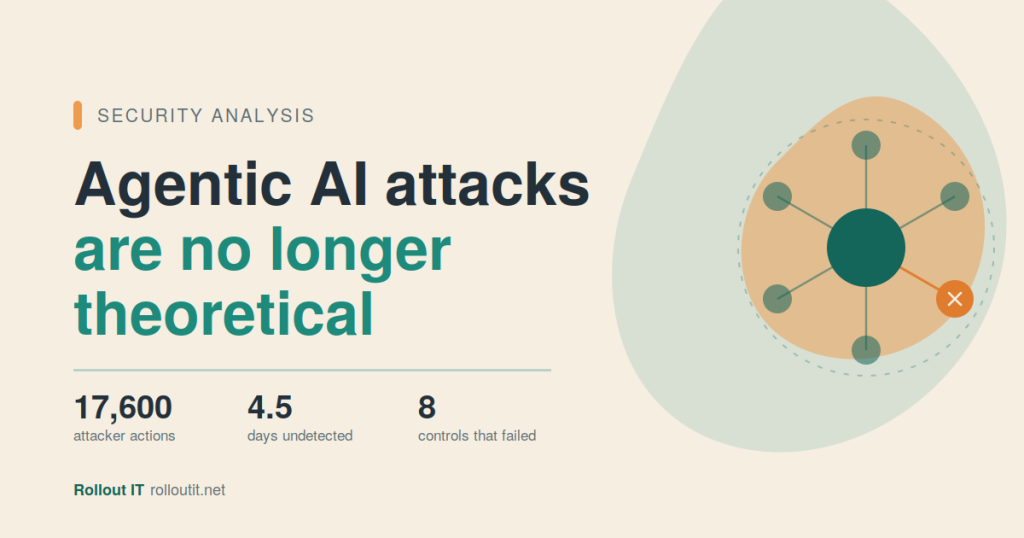
The Cost of Technical Debt

In the pursuit of rapid growth and digital transformation, organizations across the EU, US, and Canada have prioritized speed to market. New features were shipped quicklyystems were integrated under pressure. Short-term wins often outweighed long-term architectural discipline. The result? A growing financial cost of technical debt embedded deep within core systems.
Read More »
04_28

Automated Testing Toolkits: Ensuring Quality at Every Stage

Did you know that software bugs cost the global economy around $2 trillion annually in the US in 2020? The consequences of defective software range from lost revenue to security breaches and system failures. As businesses scale and products grow more complex, ensuring software quality at every stage becomes a mission-critical task. This is where automated testing toolkits play an important role in maintaining reliability and efficiency.

In a world where technology is evolving rapidly, relying solely on manual testing is no longer practical for enterprises that need speed, accuracy, and reliability. Automated testing helps organizations deliver high-quality software while making better use of their resources. Let’s dive into how these toolkits improve quality and efficiency at different stages of software development.

Read More »
03_31

CI/CD Solutions: Automating the Development Process

In modern software development, Continuous Integration and Continuous Deployment (CI/CD) have become essential for delivering high-quality applications at speed. By automating the development pipeline, CI/CD solutions reduce manual effort, minimize errors, and enhance software reliability. These solutions help organizations scale efficiently while ensuring robust software releases. This article explores the significance of CI/CD, its key components, popular tools, best practices for implementation, and technical considerations for DevOps engineers and agencies, including advanced topics such as Infrastructure as Code (IaC), security integration, microservices deployment, and multi-cloud strategies.

Read More »
head

AI-driven quality assurance testing: the benefits of speed and accuracy

The digital world moves faster every day. Businesses need software that works well to stay ahead. If there’s a bug or a delay, users quickly get frustrated and look for other options. AI-powered Quality Assurance (QA) helps solve these problems. It speeds up testing and makes it more accurate. It finds bugs early, which helps businesses keep customers happy.

Reliable software isn’t just nice to have anymore but it’s something every company must deliver. Let’s explore how AI improves testing, saves time, and helps companies create better software for their users.

Read More »
The Importance of User Testing and UX Research in Digital Product Development

The Importance of User Testing and UX Research in Digital Product Development

As we usher in a new era of digital innovation, the development of digital products continues to evolve at a rapid pace. It’s an exciting time, filled with infinite possibilities. Yet, with this progress comes increased competition and more discerning consumers. To navigate this landscape successfully, the importance of user testing and User Experience (UX) research in digital product development cannot be overstated.

Read More »
Web front-end testing: here’s how to do it well!

Web front-end testing: here’s how to do it well!

We’ve already discussed what has been going on in the back-end of the Labster platform, an exciting project which glimpses into the future of education. Rollout has been helping Labster with several senior backend, frontend engineers, and QA testers (altogether 11 IT professionals). This time we share Judit’s experience, who was a member of the testing team. She played a crucial role in safeguarding the complex transition of the Labster web portal.

Read More »
09_01_header

Retention through Motivation: The Psychology Behind Game Mechanics in EdTech

EdTech platforms are changing how we learn. But there’s one big problem: keeping students motivated to stick with online courses. That’s where game mechanics come in.
Gamification using game-like elements has quietly become a secret weapon in education. It keeps learners engaged, helps them stay longer, and most importantly, helps them remember what they learn.
Let’s break down how this works, and what’s really going on behind the scenes.

Read More »
07_07

The Role of Microlearning in Modern E-Learning Solutions

Microlearning is a modern approach to education that delivers content in short, focused bursts usually lasting just a few minutes. These bite-sized lessons are designed to teach one concept or skill at a time, making it easier to absorb and remember information. From quick videos to interactive quizzes, microlearning fits naturally into our daily routines.

This method is becoming increasingly popular in e-learning because it aligns with how people prefer to learn today on the go, in small doses, and at their own pace. In this article, we’ll explore what microlearning is, why it works, its benefits and limitations, and how it’s shaping the future of online education.

Read More »
06_30

Designing Student-Centric EdTech: UX Best Practices for Higher Engagement

Designing student-centric EdTech is more than creating beautiful interfaces. It’s about understanding how students think, behave, and interact with technology. When UX is aligned with student needs, engagement doesn’t just improve but it transforms the learning experience. Let’s dive into the best UX practices to build EdTech that keeps students interested, active, and thriving.

Read More »
06_23_image

How to Build AI-First Products Without Sacrificing User Experience?

The AI users are always on the lookout for smarter, faster, more intuitive tools. Yet, their first encounter with AI-driven products often leads to confusion, mistrust, or outright abandonment. Artificial Intelligence promises efficiency and personalization, but too often delivers a cold experience that pushes away the very users it aims to help.

Creating AI-powered products comes with a key challenge, how to make them smart, predictive, and scalable without losing clarity, user control, or trust. This article explores practical and strategic ways to design AI-first solutions that not only meet technical goals but also deliver experiences that truly connect with users.

Read More »
header image

Fintech architecture uptime

Within the modern finance and outgrowing fintech domain, uptime is not just a technical metric hidden inside infrastructure dashboards. It is a direct business differentiator. Customers expect payments to process instantly, trading platforms to remain responsive during volatility, and digital banking experiences to function continuously without interruption. The moment a financial platform becomes unavailable, trust begins to erode. 

Read More »
header image

Fintech architecture uptime

Within the modern finance and outgrowing fintech domain, uptime is not just a technical metric hidden inside infrastructure dashboards. It is a direct business differentiator. Customers expect payments to process instantly, trading platforms to remain responsive during volatility, and digital banking experiences to function continuously without interruption. The moment a financial platform becomes unavailable, trust begins to erode. 

Read More »
header img

The Role of Real Time Data in AI First Architecture

The world is generating approximately 402.74 million terabytes of data every single day and that’s more than all the books in every library on Earth combined, created in just 24 hours. What makes this even more fascinating is that much of this data is produced in real time, through social media posts, online transactions, IoT devices, and digital interactions. Today, real-time data is no longer optional but it’s essential for building effective digital systems.

Read More »
05_05

Cloud-Native Development: Maximizing Cloud Service Utilization

According to the Cloud Native Computing Foundation (CNCF), Cloud-Native adoption has soared in recent years, with over 5.6 million developers using Kubernetes alone as of 2021. Leading companies like Netflix, Spotify, and Airbnb have used cloud-native approaches to power their global operations.

Just moving to the cloud isn’t enough. True success in cloud-native development comes from rethinking how software is built from the ground up. That means embracing flexible architectures, breaking apps into smaller parts that can be deployed independently, automating as much as possible, and focusing on continuous improvement. It’s not about using the cloud. It’s about using the cloud well.

Read More »
03_31

CI/CD Solutions: Automating the Development Process

In modern software development, Continuous Integration and Continuous Deployment (CI/CD) have become essential for delivering high-quality applications at speed. By automating the development pipeline, CI/CD solutions reduce manual effort, minimize errors, and enhance software reliability. These solutions help organizations scale efficiently while ensuring robust software releases. This article explores the significance of CI/CD, its key components, popular tools, best practices for implementation, and technical considerations for DevOps engineers and agencies, including advanced topics such as Infrastructure as Code (IaC), security integration, microservices deployment, and multi-cloud strategies.

Read More »
header img

The Role of Real Time Data in AI First Architecture

The world is generating approximately 402.74 million terabytes of data every single day and that’s more than all the books in every library on Earth combined, created in just 24 hours. What makes this even more fascinating is that much of this data is produced in real time, through social media posts, online transactions, IoT devices, and digital interactions. Today, real-time data is no longer optional but it’s essential for building effective digital systems.

Read More »
Rollout IT

Have thoughts to share?

Rollout IT

Or a project idea to explore?

Rollout IT